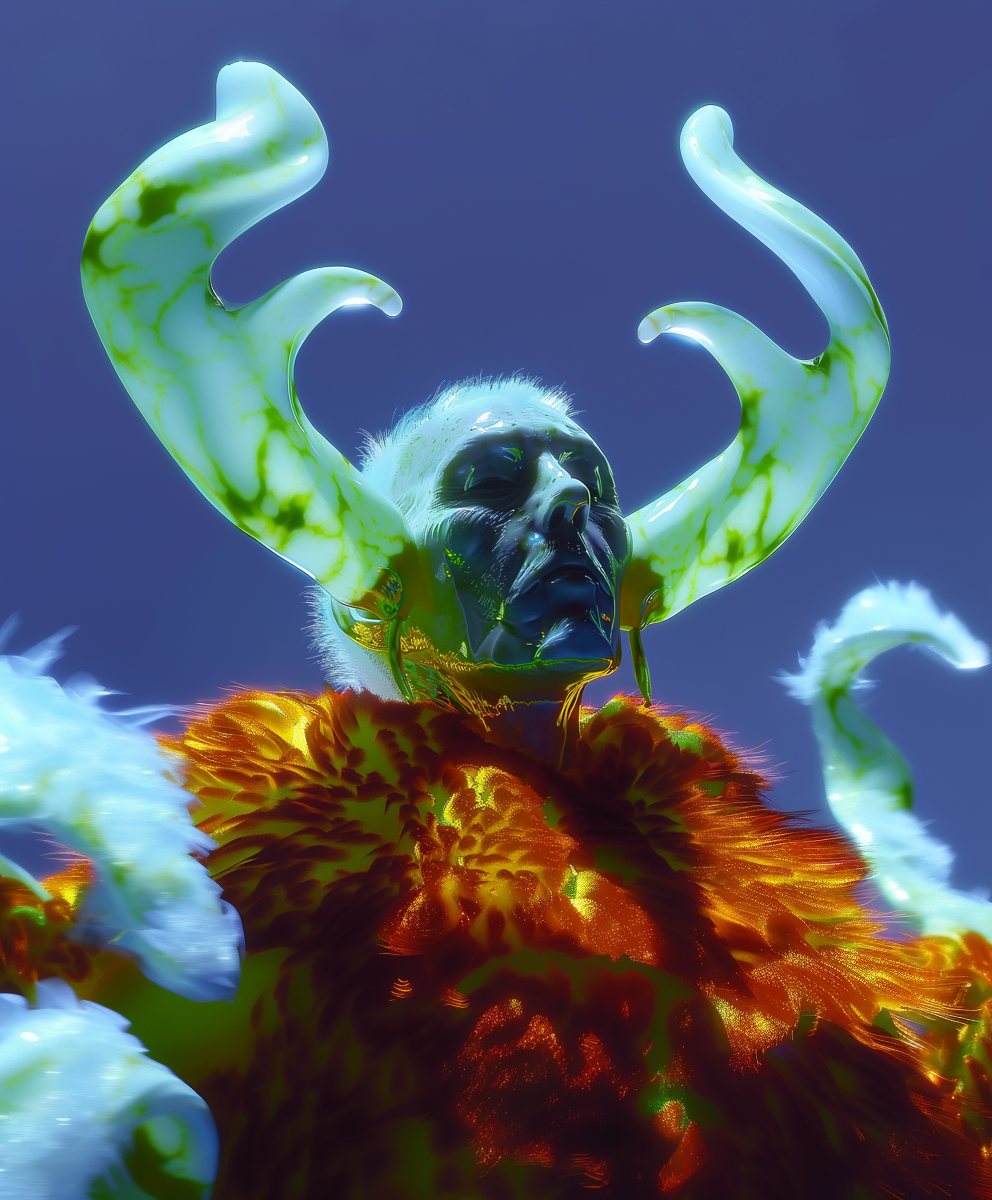
In the Ceramic Era, the boundary between flesh and glaze dissolves. Human forms emerge from luminous, translucent shells — part porcelain, part bioluminescent membrane — where skin reflects light like fired clay and every fold holds the memory of the kiln. The atmosphere itself seems glazed: cool blues and warm ambers flow around figures who stand at the threshold of solid and liquid, ancient craft and digital metamorphosis.
The second generation of Ceramic beings carries the weight of the first firing. Their surfaces bear the marks of controlled crackling — networks of fine lines that channel internal light, resembling the craquelure of antique vases. Collars of ruffled green and gold suggest both organic growth and the layered application of glazes, while antennae and horns rise like handles from ritual vessels, broadcasting frequencies that reshape the local reality.